
Jodie Lutkenhaus
Professor of Chemical Engineering, Associate Dean for Research for the College of Engineering, Associate Agency Director for the Texas A&M Engineering Experiment Station • College of EngineeringDr. Jodie Lutkenhaus explores innovative polymer materials that enable durable and sustainable energy storage. Her research is paving the way for a brighter, safer future through biodegradable battery technology.
About Jodie Lutkenhaus
Dr. Jodie Lutkenhaus is recognized for her expertise in the thermal behavior and water effects of polyelectrolyte complexes, redox mechanisms in polymer electrodes and composites for high-stiffness batteries. She also has more than 200 peer-reviewed publications on polyelectrolyte complexes, structural energy and power, organic radical polymer batteries and functional coatings.
In addition to her current leadership roles, she is the deputy editor of ACS Applied Polymer Materials, as well as a member of the U.S. National Academies Board on Chemical Sciences and Technology and U.S. National Committee for the International Union of Pure and Applied Chemistry. Lutkenhaus is the deputy director of the Fast and Cooperative Ion Transport in Polymer-Based Electrolytes(FaCT) Department of Energy Energy Frontier Research Center.
The Lutkenhaus Lab
The Lutkenhaus Lab investigates novel polymeric and select 2D materials, as well as alternative processing techniques for a variety of applications. Lutkenhaus and her students focus primarily on the behavior of polyelectrolytes in response to a variety of external stimuli. In addition, her lab investigates polymers for applications ranging from energy storage to sensors.

Dr. Jodie Lutkenhaus and her research assistants join hands in her lab.
Credit: Texas A&M University College of Engineering
Academic Achievements
Education
- Ph.D., Massachusetts Institute of Technology
- B.S., The University of Texas at Austin
Awards
- 2023 American Chemical Society Outstanding Global Mentor in Polymer Science and Engineering
- 2022 The Academy of Medicine, Engineering & Science of Texas (TAMEST) Edith and Peter O’Donnell Award
- 2021 Arthur K. Doolittle Award, ACS Division of Polymeric Materials: Sc. and Eng


Publications
For a closer look at Dr. Jodie Lutkenhaus’s research, browse her highlighted publications below.
2026 Molten salt etching mechanism of vanadium carbide MXenes
Here we report the synthesis of molten-salt etched vanadium carbide V2CTx MXenes guided by Gibbs free energy calculations for salt selection. The V2AlC MAX phase is difficult to etch due to the high bond strength of V–Al. Most reports describe etching V2AlC with HF, but this work utilizes acid-free molten-salt etching. Molten-salt etching of V2AlC to V2CTx is not well understood, especially the elucidation of the mechanism of specific salts and synthesis conditions for successful etching. Etching affinity of the Lewis acid salts was predicted using Gibbs free energy and redox potential calculations (the reaction of each salt with Al) to determine promising salt etchants for molten-salt synthesis, which were then validated experimentally. Under the specific conditions, CuF2 etched V2AlC after etching for 12 hours. To observe gaseous etching products, we report using in situ thermogravimetric analysis, confirming no degradation of the MAX phase during etching. In addition, due to the lower crystallinity of the MXenes, we use wide-angle X-ray scattering to observe the hexagonal lamellar structure and (002) peak in V2CTx MXenes, facilitating the use of alternative X-ray techniques. We show that changing key variables in the synthesis process (etching time, aluminum in the MAX phase, and ratio of MAX : salt) affects the MXene structure: over-etching occurs at long etching times, excess aluminum in the MAX phase causes byproduct formation that hinders etching, and increasing the molar ratio of salt to MAX phase promotes over-etching and oxide formation. This work provides a template for molten-salt etching of new MAX phases in the future and guides the selection of etching parameters.
2026 Temperature-Dependent Electrochemical Modeling of Redox-Active Polymer Cathodes for Lithium-Based Batteries
Electrochemical energy storage systems experience performance degradation at low temperatures due to the strong temperature dependence of ionic transport, electronic conductivity, and interfacial reaction kinetics. Poly(2,2,6,6-tetramethylpiperidinyloxy methacrylate) (PTMA) redox-active polymer cathodes have shown the ability to mitigate some of these limitations through coupled electron-ion transport via rapid redox conversion through electron hopping. However, a physics-based understanding of how temperature governs transport and kinetic behavior remain limited. In this work, we extend a continuum electrochemical modeling framework for PTMA–lithium metal batteries to explicitly incorporate temperature-dependent transport and reaction kinetics, enabling prediction of the electrochemical response over a broad temperature range under both potentiostatic and galvanostatic operation. Simulation results reveal how temperature-induced changes in transport and kinetic parameters alter rate capability, polarization behavior, and accessible capacity, providing quantitative insight into performance-limiting mechanisms across operating temperatures. By capturing these temperature-dependent effects within a unified framework, the model offers predictive capability for assessing and optimizing PTMA-based battery operation under extremely low temperature conditions.
2026 Continuum Modeling of Organic Batteries and Redox-Mediated Hybrid Systems for Low-Temperature Applications
Batteries capable of reliable low-temperature operation are critical for aerospace, space exploration, defense, and cold-climate electrification. Conventional lithium-based batteries suffer severe performance degradation under these conditions due to temperature-dependent transport limitations and sluggish interfacial kinetics, often requiring complex thermal management. Organic redox-active materials provide a promising alternative, as their charge-storage mechanisms rely on rapid, reversible redox conversion and ion-doping enabled by dual-ion transport that remains accessible at reduced temperatures. In hybrid organic–inorganic systems, redox mediation further facilitates charge transfer between dissimilar active phases, enabling complementary energy-storage mechanisms to be combined. This work develops a physics-based continuum electrochemical modeling framework for low-temperature organic and hybrid batteries. The framework captures coupled electron and multi-ionic transport, interfacial reaction kinetics, and temperature-dependent material properties, enabling systematic evaluation of electrochemical performance across operating temperatures. The model provides predictive insight into how composition, transport properties, and reaction mechanisms govern rate capability, polarization, and accessible capacity at low temperatures. Together, this modeling-driven approach enables rational design of next-generation organic and hybrid batteries optimized for high-rate operation in low-temperature environments.

We have a better molecular level picture of what makes some battery electrodes work better than others, and this gives us strong evidence of where to go forward in materials design.
Jodie Lutkenhaus in the News

Why cold weather cripples today’s batteries and what researchers are doing about it.

Battery made from natural materials could replace conventional lithium-ion batteries
Sep. 24, 2025 • 5 min. readTexas A&M researchers develop a biodegradable battery using ingredients found in the human body.
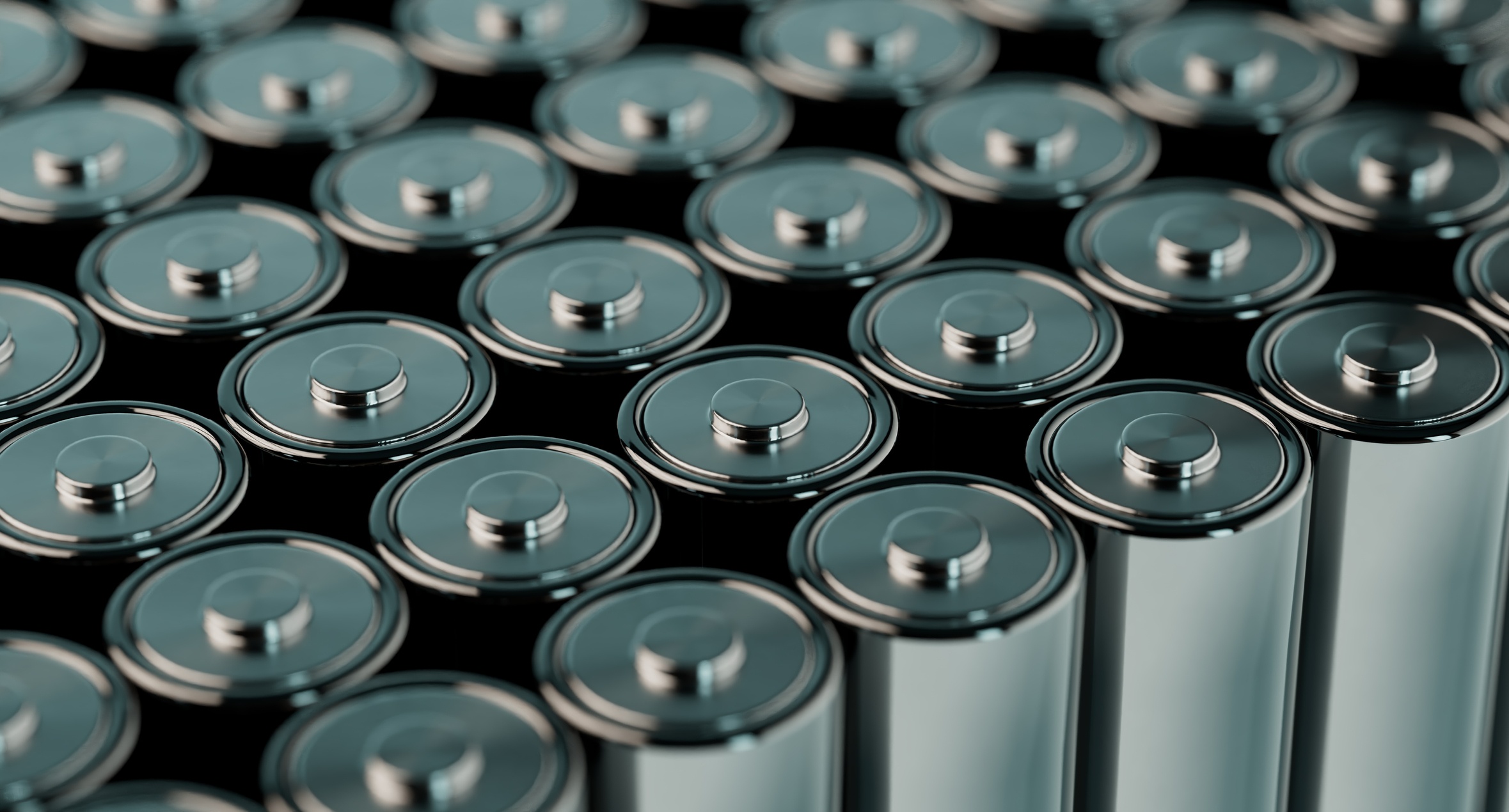
Texas A&M Researchers Find Major Storage Capacity In Water-Based Batteries
April 5, 2023 • 3 min. readThe team discovered a groundbreaking increase in the storage capacity of water-based battery electrodes, an important step in the development of lithium-free batteries.
Media Contacts
Journalists interested in speaking with Dr. Jodie Lutkenhaus or another Texas A&M expert should contact the news team.
Email our news team Together, We Stand as a Force for Good.
At Texas A&M University, we develop leaders of character who take action and create lasting impact. Through educational excellence and world-class research, we are building a brighter, safer world for the people of Texas, the nation and beyond.