Bird poop fueled pre-Incan agricultural success
A team of international researchers has uncovered evidence of seabird guano use by ancient cultures.

The Islas Ballestas off the coast of the Chincha and Pisco Valleys in Peru remain an important location for many seabird species, as well as seals and other marine animals. Birds today are less abundant than they were in the past, leading to decreased guano accumulation compared to earlier eras.
Historical and archaeological evidence has suggested that pre-Incan cultures in South America used guano — nutrient-rich droppings from seabirds — as a fertilizer for their crops to great effect, but new isotopic analysis by an international team of researchers provides the first direct physical evidence of its use in the area.
“When the Chincha were brought into the Inca Empire, sometime probably between 1400 and 1450, they enjoyed unequal status compared to any other kingdom or state,” said Jo Osborn of the Texas A&M University Department of Anthropology, who participated in the study. “At the battle of Cajamarca, when the Spanish encountered the Inca and took Emperor Atahualpa as their hostage, they wrote in their chronicles that the only other person being carried on a litter, other than the Inca himself, was the lord of Chincha.”
The team tested maize cobs from looted graves, which were collected by study lead Dr. Jacob Bongers of the University of Sydney. The researchers looked at the isotopic ratio of several elements to compare to their expectations. “We were interested in nitrogen isotope values because a Canadian team of researchers published some experimental studies in 2012 showing that camelid dung and seabird guano both result in higher nitrogen isotope values in fertilized crops than unfertilized crops,” said Dr. Emily Milton, a biogeochemist co-author of the paper and a Peter Buck Postdoctoral Fellow at the Smithsonian National Museum of Natural History. “Therefore, measuring nitrogen isotope values from archaeological plants can provide a reliable method for identifying the use of fertilizers in the past.”
The team’s data showed that about half of the tested cobs had stable nitrogen isotope values so high that “the use of seabird guano is presently the only known explanation” Milton said. She added: “The present assumption of the field is that stable isotope values of desiccated or charred plants more-or-less reflect the values of the plant during its life (we assume our values are close to those of the plant when picked and used by people); that said, archaeological plant stable isotopes are a relatively new analysis, and some of this understanding could change.”
Historical evidence has already provided an idea of how farmers used guano. The people of Luanhuana, north of the Chincha Valley, were known to fertilize their fields with guano. Additionally, research from Swiss naturalist Johann Jakob von Tschudi (1818–1889) helped confirm that Indigenous cultures understood and exploited the fertilizing power of guano long before the 19th century. He noted “A fist-sized amount of the fertilizer was added to each plant, and entire fields were subsequently submerged in water.” Guano is approximately 10 to 20 percent nitrogen by mass, so a little goes a long way, and a handful per plant may have been enough.
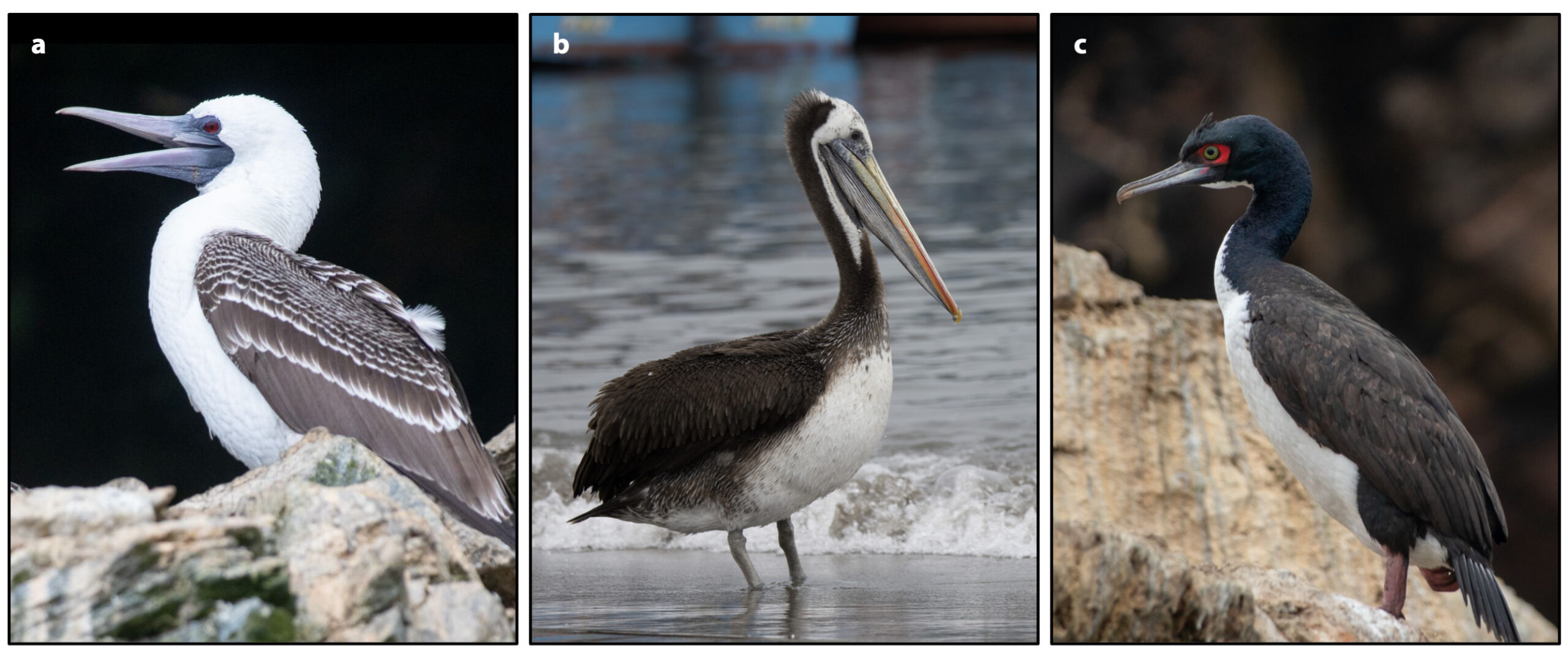
The Chincha did not simply collect bird droppings from around their homes, though. About 25 kilometers off the coast, they had access to a trio of the best guano islands in South America, on which Osborn said clouds of birds roosted and bred, safe from predators and other dangers.
“They were not just going out to the island to poop, and that’s it,” she said. “They were also creating their nests. Back in the day, before the 19th century, there were millions of birds flocking to the islands.”
As the world entered the 19th century, though, industrialization hit the guano islands. Guano makes for a fantastic fertilizer, and thus the perfect additive for farms feeding explosive population growth. Likewise, the same high nitrogen content that fuels plant growth also makes an excellent explosive when refined, turning guano into a resource for war.
Under Inca law, it was forbidden to hunt guano birds or even go near the islands during certain times of the year, such as the birds’ breeding season. Birds were so important to the Chincha that their art depicts birds in a range of styles and mediums ranging from fired pottery to royal friezes.
“The iconography of the Chincha people is just completely covered in seabirds and fish,” Osborn said. “There are also architectural friezes at local administrative centers and the palace on which birds, fish and what appear to be sprouting maize is depicted.”
The islands were so important to Chincha culture that they named the northernmost Urpihuachac, a coastal deity associated with the sea, including fish and seabirds. In some tellings, she was married to the coastal creator deity Pachacamac. Another of the islands is named after her daughter, Quillayraca.
“The act of traveling to these islands was special and heavily ritualized,” Osborn said. “It was not a trip they made every day. They had to prepare for it. To prepare for the journey, the chronicles explain, they would fast and abstain from sexual relationships. They approached it with preparation and offerings such as luxury goods, food and drink in exchange for the guano they took from the island.”
The population of the Chincha Valley was large for its time — about 30,000 specialized workers, such as fisherfolk and merchants, and approximately 100,000 people living in the area, all supported by the increased yields of farms bolstered by guano.
At the time, while other cultures were being forced into cooperation, “The Inca incorporated Chincha into their empire after a ‘peaceful’ capitulation, creating one of the few calculated alliances of its kind for this time.”
As the paper states, guano “likely contributed to the rise of the Chincha Kingdom and enhanced its strategic importance for the Inca Empire.”
More information: Seabirds shaped the expansion of pre-Inca society in Peru
DOI: 10.1371/journal.pone.0341263
https://journals.plos.org/plosone/article?id=10.1371/journal.pone.0341263
Journa: PLOS One